For employment-based immigration teams, site-visit preparation depends on current records, consistency between the petition and operating facts, and a clear path to counsel when verification questions arise.
Teams get into trouble when visit prep starts only after an officer shows up. That is too late. Good prep looks like a standing workflow: clean public access files where needed, current support letters, reachable client contacts, and one accurate internal summary for each matter that could attract scrutiny.
What officers tend to surface operationally
Even when the underlying case is sound, the visit gets ugly if your operational evidence is stale. The common issues are painfully familiar:
- Job title, location, manager, or reporting line in the petition does not match what the employer team now says.
- Supporting documents are technically available, but nobody can pull them fast enough.
- Front-desk or HR contacts were never briefed on who should respond and escalate.
- Internal notes about amendments, remote work, or compensation changes live outside the main matter record.
A normal prep workflow, not a panic workflow
The right model is a quarterly readiness check for higher-risk employment-based matters, especially cases involving location changes, remote work drift, vendor placements, or role evolution. Waiting for a trigger email is amateur hour.
What should be in the packet
- Latest petition summary and support letter
- Current org chart or manager confirmation
- Worksite and remote-work record, if relevant
- Payroll or compensation confirmation where appropriate
- Internal escalation contacts and counsel instructions
Why these visits spiral
Not because teams are malicious, usually. Because nobody owns the living version of the truth after filing. A case that was accurate at filing can drift operationally in six months. If your system does not surface that drift early, your prep becomes a scavenger hunt.
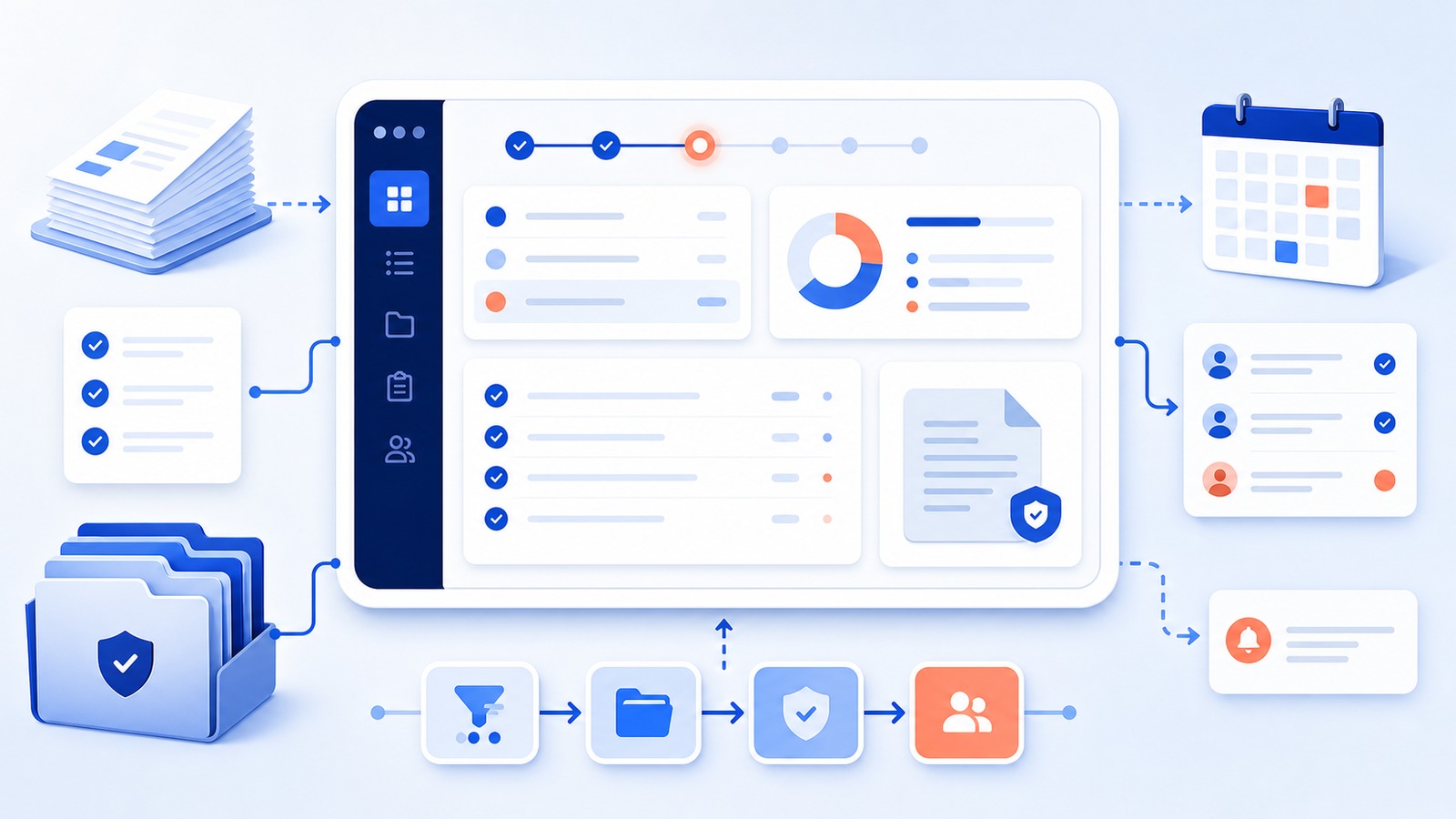
This is where workflow automation helps more than another static checklist. The useful automations are the ones that flag data drift, remind employer contacts to confirm core facts, and bundle the right support record into one clean review packet.
How to make site-visit readiness boring
- Tag matters with site-visit risk signals, not just visa type.
- Run scheduled employer fact-confirmation prompts for location, manager, and role changes.
- Keep a prebuilt packet template that updates from the matter record.
- Record every substantive change in one canonical matter timeline.
Good prep is really operational integrity
If a team can answer simple questions quickly, produce current support records, and route the visit to the right people without theater, the visit becomes manageable. That does not happen by accident. It happens because the workflow was designed before anyone needed it.
Most immigration ops problems look legal from far away and operational from close up. Site-visit prep is one of the clearest examples.
Primary sources
- USCIS Administrative Site Visit and Verification Program
- USCIS Fraud Detection and National Security Directorate
Sources last verified September 15, 2026. Program scope and procedures can change; confirm current USCIS materials and obtain case-specific legal guidance.
Related workflows
Review the H-1B intake checklist for upstream fact collection and the immigration review QA workflow for source-linked packet checks.
Read More articles